HEX, RGB, and CMYK Explained
When it comes to branding, design, and creating visuals that truly resonate, understanding colour theory isn't just an art—it's a science. Colour choices affect everything from emotional response to brand recognition. But beyond choosing “blue” or “pink,” there’s a technical side to colour that ensures your brand looks consistent across different platforms and materials.
Let’s dive into the basics of colour theory and decode what all those numbers and codes — like HEX, RGB, and CMYK — actually mean.
The Basics of Colour Theory
At its core, colour theory is a framework that guides how colours interact, complement, and contrast with one another. It's why some colour combinations feel harmonious while others feel chaotic.
Key principles of colour theory include:
Primary colours (Red, Blue, Yellow) are the foundation of all other colours.
Secondary colours (Green, Orange, Purple) are created by mixing primary colours.
Tertiary colours are a blend of primary and secondary colours.
Complementary colours are opposite each other on the colour wheel and create strong contrast (think Blue and Orange).
Analogous colours are next to each other on the color wheel and create harmony (think Blue, Teal, and Green).
While colour theory helps you choose colours wisely, understanding colour systems like HEX, RGB, and CMYK helps you apply those colours correctly, ensuring your brand is consistent across web, print, and digital spaces.
What the Numbers Mean: HEX, RGB, and CMYK
HEX Codes
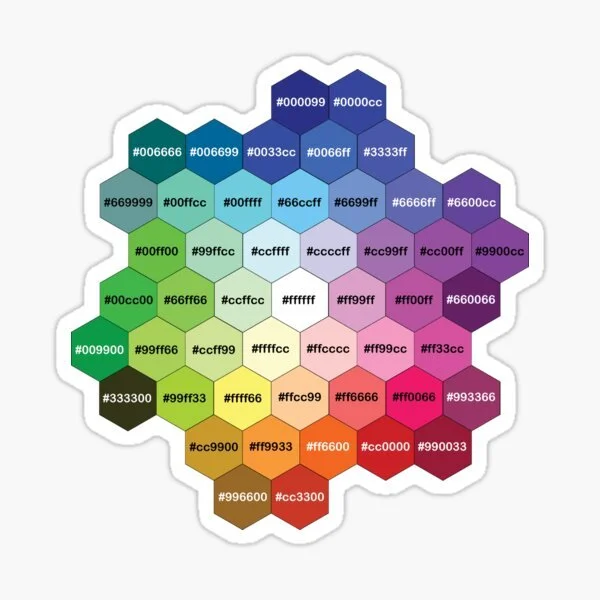
HEX stands for hexadecimal — a six-digit combination of numbers and letters that represents a colour used primarily in web design.
A HEX code looks like this: #FFFFFF (White) or #000000 (Back).
Each HEX code represents values for red, green, and blue (RGB) but condensed into one single string for simplicity in digital spaces.
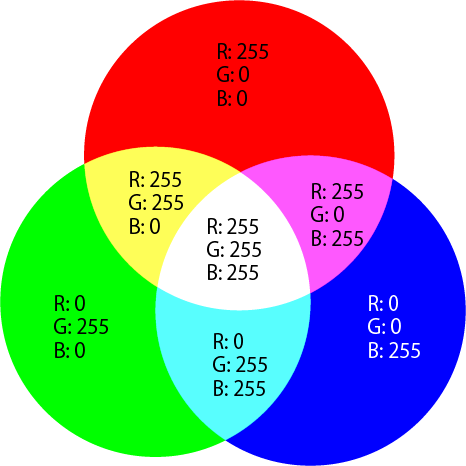
The first two characters represent Red.
The next two represent Green.
The last two represent Blue.
For example:
#FF0000 = Pure Red
#00FF00 = Pure Green
#0000FF = Pure Blue
Why it matters: When building websites, apps, or digital graphics, using precise HEX codes ensures your brand colours stay consistent across all screens.
RGB
RGB stands for Red, Green, Blue, the three light sources combined in various ways to create a broad array of colours on digital screens.
Each colour is expressed with a value between 0 and 255:
0 means no color
255 means full intensity
Example:
rgb (255, 0, 0) = Red
rgb (0, 255, 0) = Green
rgb (0, 0, 255) = Blue
rgb (0, 0, 0) = Black
rgb (255, 255, 255) = White
Why it matters: RGB is used in anything that displays on a screen—computers, phones, tablets, TVs. When designing for digital, you’re working with light, not ink, and RGB allows for vibrant, luminous colours.
CMYK
CMYK stands for Cyan, Magenta, Yellow, and Black (K stands for “Key,” referring to the black key plate in traditional printing).
Unlike RGB, which is based on light, CMYK is based on ink — it’s a subtractive colour model used for printed materials.
Each color is a percentage:
0% = none of that colour
100% = full saturation of that colour
Example:
C=100%, M=0%, Y=0%, K=0% = Pure Cyan
C=0%, M=100%, Y=0%, K=0% = Pure Magenta
Why it matters: When designing anything for print (flyers, posters, business cards, packaging), your files must be in CMYK to ensure accurate color output by the printer. RGB colors may look brilliant on screen but can print inaccurately if not converted to CMYK.

Quick Summary: When to Use Each
HEX: Web design, digital branding, online graphics
RGB: Screen, digital displays, online content
CMYK: Print materials (brochures, business cards, packaging)
Why Understanding Colour Systems Matters for Your Brand
Choosing the right colour isn’t just about what feels right — it's about ensuring your brand appears consistently beautiful and professional across every touchpoint. A slight variation in your brand colour from your website to your business card can subconsciously erode trust and professionalism. Knowing how to manage HEX, RGB, and CMYK protects the integrity of your brand visuals everywhere your audience encounters you.
Ready to Create a Brand That Looks Consistent and Professional Everywhere?
At Angell Designs, we make sure your brand colours are spot-on across all digital and print platforms. If you're ready for branding that’s not only beautiful but also technically sound, contact me today to bring your vision to life.