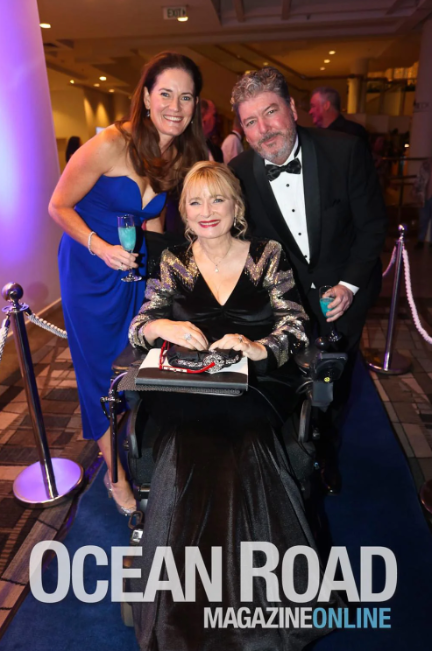
Carol Taylor
〰️
Case Study
〰️
Carol Taylor 〰️ Case Study 〰️
Image from Carol Taylor Designs (2026d)
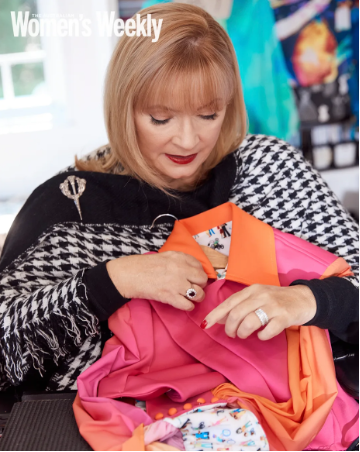
Carol Taylor is an Australian adaptive fashion designer, artist, lawyer, and disability advocate (Taylor, 2022; National Disability Insurance Scheme, 2022) whose work sits at the intersection of creativity, lived experience, and social change. After a severe accident in 2001 left her a quadriplegic, Taylor was forced to navigate not only the physical realities of a spinal cord injury, but also the exclusion and isolation built into everyday systems, in particular fashion (C. Taylor, personal communication, April 9, 2026; Carol Taylor Designs, 2026d). Rather than accepting those limitations, she began designing clothing for herself, teaching herself to create with modified tools (C. Taylor, personal communication, April 9, 2026) and eventually transforming that personal response into a pioneering design practice (Carol Taylor Designs, 2026d). Over time, she became recognised as the world’s first quadriplegic fashion designer (Carol Taylor Designs, 2026d; Gannon, 2022; Taylor, 2022; Blaauw, 2021), while also maintaining a successful legal career and a strong advocacy presence within the disability community (Carol Taylor Designs, 2026d).
Taylor’s work is significant because it challenges the long-standing separation between functionality and beauty in adaptive clothing (C. Taylor, personal communication, April 9, 2026; Birrell, 2022). Her designs are informed by real embodied experience, addressing practical needs such as pressure care, dignity, and ease of dressing, while still embracing colour, style, and individuality (C. Taylor, personal communication, April 9, 2026; Carol Taylor Designs, 2026d). Her collections and runway work, including the historic adaptive showcase at Afterpay Australian Fashion Week (2022) (Birrell, 2022), have helped push inclusive fashion further into the mainstream and open up conversations about who fashion is really designed for (C. Taylor, personal communication, April 9, 2026).
A Timeline of Major Events & Milestones
-
![A winding forest road with slightly transparent filter and a black winding road across the centre. There is a teal pin in the black road with the number 1 inside and the text "Before 1993" in the top right corner.]()
Before 1993
Carol Taylor grew up in rural Ireland, in southern counties of Limerick and Cork. Developed a love of fashion from a very young age (C. Taylor, personal communication, April 9, 2026). Studied textiles in home economics at school. Later took a Saturday TAFE sewing course, and eventually moved to Sydney where she considered arts before choosing law (Gannon, 2022).
-
![A winding forest road with slightly transparent filter and a black winding road across the centre. There is a teal pin in the black road with the number 2 inside and the year 1993 in the top right corner.]()
1993
Taylor graduated in law and was admitted to the Supreme Court of NSW, beginning her professional legal career in Sydney (Carol Taylor Designs, 2026d). She later reflected that this period was shaped by sexism and inequality in the profession, which left her disheartened despite academic success (Gannon, 2022).
-
![A winding forest road with slightly transparent filter and a black winding road across the centre. There is a teal pin in the black road with the number 3 inside and the year 1998 in the top right corner.]()
1998
Married Robert Taylor (Gannon, 2022) and established Bolan & Mahon Solicitors on Sydney’s North Shore (Carol Taylor Designs, 2026d).
-
![A winding forest road with slightly transparent filter and a black winding road across the centre. There is a teal pin in the black road with the number 4 inside and the year 2001 in the top right corner.]()
2001
Involved in a severe car crash that severed her spinal cord and left her a quadriplegic, paralysed from the chest down (including her hands)(C. Taylor, personal communication, April 9, 2026). She spent about 1 year in hospital (C. Taylor, personal communication, April 9, 2026), regained speech after 2 months, had to relearn basic skills, and experienced deep depression and acute PTSD during recovery (C. Taylor, personal communication, April 9, 2026; Carol Taylor Designs, 2026d; Gannon, 2022).
-
![A winding forest road with slightly transparent filter and a black winding road across the centre. There is a teal pin in the black road with the number 5 inside and the year 2002 in the top right corner.]()
2002
Carol had begun designing clothing for herself and working with a dressmaker because mainstream fashion no longer met her needs (C. Taylor, personal communication, April 9, 2026). This shift mattered not only practically but emotionally, as she linked exclusion from fashion to feelings of isolation that impacted both mental and physical health (C. Taylor, personal communication, April 9, 2026; Carol Taylor Designs, 2026d).
-
![A winding forest road with slightly transparent filter and a black winding road across the centre. There is a teal pin in the black road with the number 6 inside and the year 2005 in the top right corner.]()
2005
Moved to QLD while continuing to rebuild her life after injury. The beginning of her adaptive clothing practice, including a gown she designed for her cousin’s wedding (Gannon, 2022).
-
![A winding forest road with slightly transparent filter and a black winding road across the centre. There is a teal pin in the black road with the number 7 inside and the year 2006 in the top right corner.]()
2006
Despite Carol and her husband being told children would not be possible as a complication of her injury, after 8 Years of IVF, 15 Embryo transfers and miscarriage after miscarriage, they welcomed their son, D'arcy into the world. Robert started Carol on her artistic journey as a means to help manage her mental health. After a move from Sydney to Queensland, D'arcy was conceived the old-fashioned way and Carol claims him without doubt to be her greatest work of art!" (C. Taylor, personal communications, July 23, 2026)
-
![A winding forest road with slightly transparent filter and a black winding road across the centre. There is a teal pin in the black road with the number 8 inside and the year 2010 in the top right corner.]()
2010
Art practice reached a new stage when we was recognised at the Bentley Art Show winning Novice 1st Prize (Carol Taylor Designs, 2026c).
-
![A winding forest road with slightly transparent filter and a black winding road across the centre. There is a teal pin in the black road with the number 9 inside and the year 2013 in the top right corner.]()
2013
Work appeared in connection with the Royal Queensland Art Society, reflecting her growing visibility in the art world (Carol Taylor Designs, 2026c).
-
![A winding forest road with slightly transparent filter and a black winding road across the centre. There is a teal pin in the black road with the number 10 inside and the year 2014 in the top right corner.]()
2014
Began putting her artwork onto fabric and designing from there (C. Taylor, personal communication, April 9, 2026). Also recognised in the RSPCA Calendar Competition (Carol Taylor Designs, 2026c).
-
![A winding forest road with slightly transparent filter and a black winding road across the centre. There is a teal pin in the black road with the number 11 inside and the year 2015 in the top right corner.]()
2015
After 14-year absence from legal practice, she founded Taylor Law & Conveyancing (Carol Taylor Designs, 2026d).
-
![A winding forest road with slightly transparent filter and a black winding road across the centre. There is a teal pin in the black road with the number 12 inside and the year 2016 in the top right corner.]()
2016
Received multiple placings at the Mudgeeraba Show and was named Champion Exhibitor (Carol Taylor Designs, 2026c).
-
![A winding forest road with slightly transparent filter and a black winding road across the centre. There is a teal pin in the black road with the number 13 inside and the year 2018 in the top right corner.]()
2018
One of Carol’s paintings won the Queensland Access Arts Achievement Award ($10,000 in funding). She used the momentum to place her artwork on fabric and explore adaptive clothing design for others with disability (Carol Taylor Designs, 2026d; Gannon, 2022)..
-
![A winding forest road with slightly transparent filter and a black winding road across the centre. There is a teal pin in the black road with the number 14 inside and the year 2019 in the top right corner.]()
2019
Debuted her adaptive fashion designs at the Mercedes-Benz Fashion Festival Brisbane, initially under the name MeQ Designs. Also exhibited at Artisan Brisbane where half her wardrobe was on display for 2 months (Carol Taylor Designs, 2026d)
-
![A winding forest road with slightly transparent filter and a black winding road across the centre. There is a teal pin in the black road with the number 15 inside and the year 2020 in the top right corner.]()
2020
Work featured in the Tuggeranong Arts Centre Agency by Design Exhibition (Carol Taylor Designs, 2026c).
-
![A winding forest road with slightly transparent filter and a black winding road across the centre. There is a teal pin in the black road with the number 16 inside and the year 2021 in the top right corner.]()
2021
Won the Queensland Law Society Regional Practitioner of the Year Award (Carol Taylor Designs, 2026d) and the Disability Leadership Awards (Arts category). The Iconic began stocking garments connected to her adaptive fashion work in July (Gannon, 2022).
-
![A winding forest road with slightly transparent filter and a black winding road across the centre. There is a teal pin in the black road with the number 17 inside and the year 2022 in the top right corner.]()
2022
While preparing to launch her own label, Carol was approached to partner with Jessie Sadler and became Head of Design and Production for Christina Stephens (SPINALpedia, 2024).
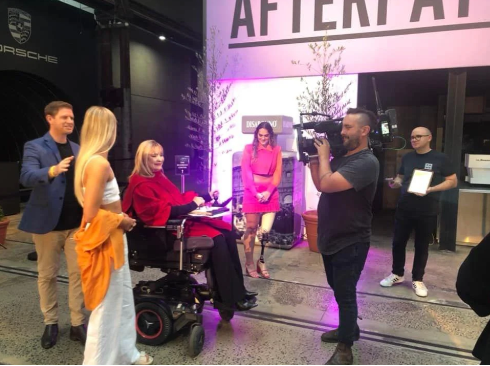
Debuted the “Unwrapped” collection at Afterpay Australian Fashion Week on Australia’s first adaptive runway (C. Taylor, personal communication, April 9, 2026; Carol Taylor Designs, 2026d).
-
![A winding forest road with slightly transparent filter and a black winding road across the centre. There is a teal pin in the black road with the number 18 inside and the year 2023 in the top right corner.]()
2023
Named a finalist in the Lord Mayer’s Business Awards and the Australian Women’s Small Business Champion Awards (Carol Taylor Designs, 2026c).
-
![A winding forest road with slightly transparent filter and a black winding road across the centre. There is a teal pin in the black road with the number 19 inside and the year 2024 in the top right corner.]()
2024
Designer of ATSA’s Award-Winning Innovative Product of the Year and a finalist in the Telstra Best of Business Awards (Championing Health category)(Carol Taylor Designs, 2026c). The partnership between Jessie Sadlerr and Carol Taylor ended (Bradley, 2024).


















When I look at Carol Taylor’s work, I admire her incredible personal resilience and intentional design thinking.
Design Discipline & Creative Process
Image from Carol Taylor Designs (2026b)
-
Carol Taylor’s design discipline sits within adaptive and inclusion fashion, but her approach clearly resists the idea that adaptive clothing should be treated as separate from “real” fashion (SPINALpedia, 2024). Taylor repeatedly frames her work as part of mainstream fashion (C. Taylor, personal communication, April 9, 2026) rather than a niche medical category. Her philosophy is that “adaptive clothing should be another category of mainstream fashions,” (C. Taylor, personal communication, April 9, 2026) and that the stigma surrounding disability in fashion needs to be dismantled (Birrell, 2022). In this sense, her discipline is not simply about garment design; it’s also about reshaping the values of the fashion industry itself.
A key feature of Taylor’s design thinking is her insistence that function and beauty should coexist (Birrell, 2022). Rather than accepting the common assumption that clothing for disabled people must prioritise practicality at the expense of style (C. Taylor, personal communication, April 9, 2026), she argues that adaptive fashion should balance function and beauty like any other area of fashion (Birrell, 2022). This places her work within a broader inclusive design framework. This framework suggests accessibility is part of the design outcome from the very beginning. Her work therefore challenges the long-standing tendency for adaptive clothing to feel clinical, limited, or disconnected from personal style.
-
Taylor’s design philosophy is grounded in the belief that fashion is deeply connected to identity, confidence, and belonging (C. Taylor, personal communication, April 9, 2026; Birrell, 2022). She explains that fashion goes to a person’s “core sense of identity” and directly affects both self-perception and how others perceive them (C. Taylor, personal communication, April 9, 2026; Birrell, 2022; Taylor, 2022). This is important because it shows her work is not only responding to physical needs but also emotional and social needs (Strickfaden et al., 2013). Her garments are designed to support dignity, self-expression, and visibility (Carol Taylor Designs, 2026a) for people who have historically been excluded from mainstream fashion systems (C. Taylor, personal communication, April 9, 2026).
This philosophy also emerges in her broader goal for adaptive clothing to become normalised within mainstream culture (C. Taylor, personal communication, April 9, 2026; Gannon, 2022; Taylor, 2022). Taylor’s endgame is to create a future where disabled people can shop, try things on, and access “all the same beautiful things” as able-bodied consumers (C. Taylor, personal communication, April 9, 2026; Gannon, 2022). That ambition reveals her design philosophy is centred on equity rather than special treatment (C. Taylor, personal communication, April 9, 2026).
-
One of the most distinctive aspects of Taylor’s methodology is that it’s grounded in lived experience. Her design work emerges from her own experience as a quadriplegic (Carol Taylor Designs, 2026d), as well as from the experiences of friends, colleagues, and other people within the disability community (Carol Taylor Designs, 2026d; SPINALpedia, 2024). This means her process is based on the embodied knowledge of the everyday realities of dressing, sitting, moving, and navigating a fashion world that was not designed with disabled bodies in mind .
This lived experience is not presented as incidental. Rather, it’s central to the legitimacy of her design practice. According to Taylor and Sadler (2024), Carol Taylor mentions that “unless you live it, it’s very hard to cater for it,” particularly in relation to wheelchair users. That comment is revealing because it shows how her methodology is based on proximity to the problem. This makes her process highly user-centred, but in a much deeper sense than conventional design language would suggest.
-
Taylor’s creative process began with necessity. Taylor and Sadler (2024) suggests that “everything comes from this and drives design forward,” referring to a requirement or need. While her process begins with aesthetics, she deeply considers how to address real problems for disabled wearers (C. Taylor, personal communication, April 9, 2026): pressure sores, dressing difficulties, seated discomfort, catheter access, mobility restrictions, or dexterity limitations (Carol Taylor Designs, 2026a). From there, she works toward a garment that can resolve or ease that issue without losing style, colour, or personality (Blaauw, 2021).
Taylor doesn’t reject fashion culture. She keeps a close eye on the broader fashion industry (C. Taylor, personal communication, April 9, 2026) and regularly asks herself what she would love to wear and how it could be adapted to make it possible (Taylor & Sadler, 2024). She observes mainstream garments, trends, and silhouettes, then reworks them through and adaptive lens (C. Taylor, personal communication, April 9, 2026). In that sense, her creative process is both analytical and imaginative (Bradley, 2024). She identifies a desirable aesthetic and then redesigns it to become wearable, functional, and inclusive (C. Taylor, personal communication, April 9, 2026).
-
Taylor’s creative process is also shaped by collaboration. Because of her physical limitations caused by her injury , she has spoken about needing others to act as her hands in some parts of the making process (Carol Taylor Designs, 2026d). She designed for herself early on while working with a dressmaker (C. Taylor, personal communication, April 9, 2026; Carol Taylor Designs, 2026d; Blaauw, 2021) and later described having a sewing machine she could operate with her knuckle (C. Taylor, personal communication, April 9, 2026) but still needing help cutting fabric (Gannon, 2022). This means her process is not the romanticised image of the solitary designer making everything independently. Instead, it’s adaptive, collaborative, and honest about interdependence.
That collaborative dimension doesn’t diminish her authorship. If anything, it strengthens it. Her role is in ideation, problem identification, and design development. The partnership model seen later in her career, including her work as lead designer and Head of Design at Christina Stephens (Gannon, 2022; SPINALpedia, 2024; Birrell, 2022; Taylor & Sadler, 2024; Bradley, 2024), further suggests that Taylor’s process combines personal insight with teamwork.
Expanding Visibility of Adaptive Fashion
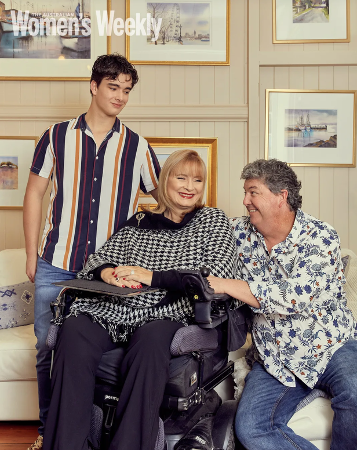
“Adaptive clothing should be another category of mainstream fashion.”
~ Carol Taylor ~
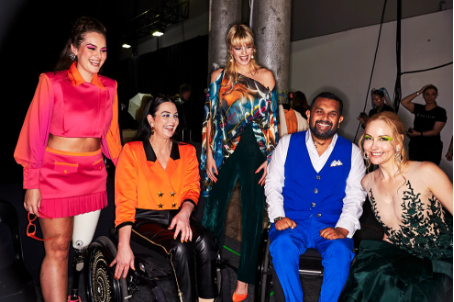
One of Carol Taylor’s most significant contributions to the design world is the visibility she has helped bring to adaptive fashion within mainstream fashion culture (C. Taylor, personal communication, April 9, 2026). Her work has moved into highly visible public platforms including the 2019 Mercedes-Benz Fashion Festival Brisbane (Toune, 2019; Beesley, 2019) and, most notably, the 2022 Afterpay Australian Fashion Week adaptive runway (Carol Taylor Designs, 2026b; Carol Taylor Designs, 2026d; SPINALpedia 2024). According to Blaauw (2021), the 2019 show marked the first time an all-visible disability cast of models was showcased on a national runway, while the 2022 event was described as Australia’s first-ever adaptive runway and a “historic moment for adaptive fashion” (Carol Taylor Designs, 2026d). These events positioned Taylor as someone actively shifting what can be seen, valued, and celebrated within the fashion industry.
This visibility matters because fashion has historically excluded disabled bodies, both in who gets represented and designed for (C. Taylor, personal communication, April 9, 2026). Taylor’s work directly confronts that absence. In Beesley (2019), she states that people with disability have been “left out of the fashion conversation,” (C. Taylor, personal communication, April 9, 2026) and her career can be understood as a response to that exclusion. By bringing adaptive fashion onto major runways and into public discourse, she has helped make disability more visible in a field that has long privileged narrow ideals of beauty, mobility, and bodily normativity.
Innovation in Adaptive & Universal Design
Taylor’s impact also lies in the innovations she has contributed to fashion design itself. Her work demonstrates that adaptive clothing does not need to be clinical, purely functional, or visually uninspiring.
Image from Carol Taylor Designs (2026d)
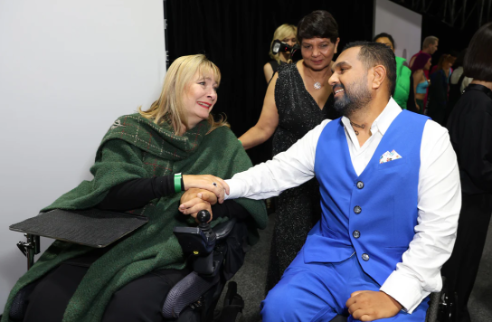
Instead, her garments combine practical problem-solving with aesthetic appeal through features including:
(C. Taylor, personal communication, April 9, 2026; Carol Taylor Designs, 2026a)
Hidden magnetic closures
Wrap-around dressing methods
Bamboo back panels for comfort
Seamless backs to reduce pressure sores
Extended lengths for seated bodies
Discreet access points for medical devices such as catheter bags
Taylor powerfully contributes to design because she challenges the false binary between accessibility and style (Sadler & Taylor, 2023). In doing so, Taylor helps redefine adaptive fashion as a creative and future-facing area of design practice.
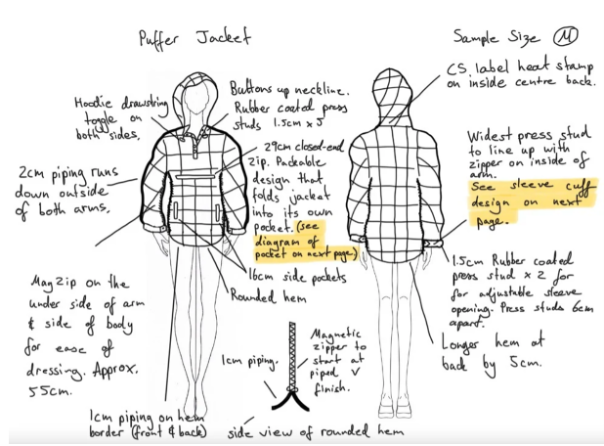
Design sketch of adaptive puffer jacket and vest in a pillow (Image from Carol Taylor Designs, 2026a)
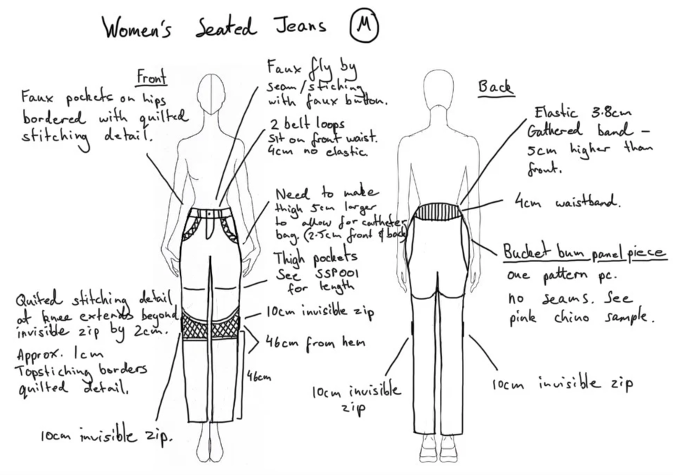
Design sketch of adaptive jeans design for women (Image from Carol Taylor Designs, 2026a)
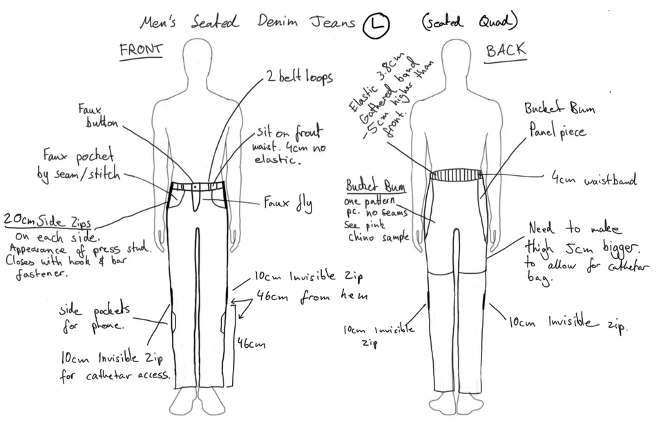
Design sketch of adaptive jeans design for men (Image from Carol Taylor Designs, 2026a)
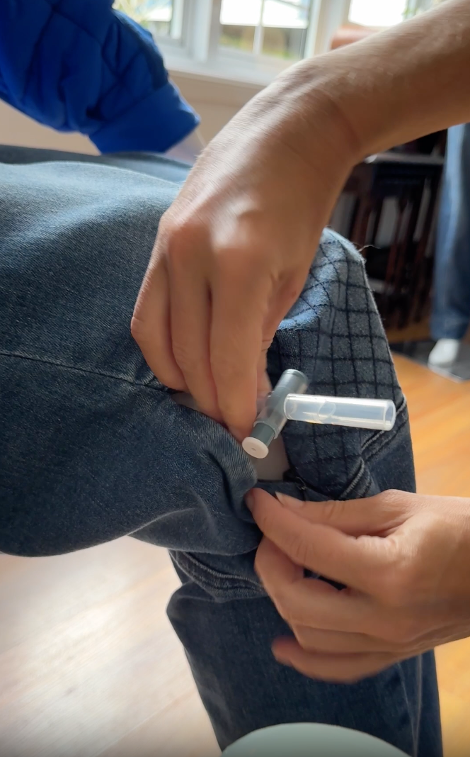
Hidden catheter tube zip access in design being demonstrated (Image from Carol Taylor Designs, 2026a)
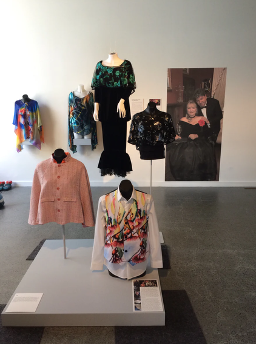
Artisan Gallery Exhibit, Brisbane (2019) (Image from Carol Taylor Designs, 2026d)
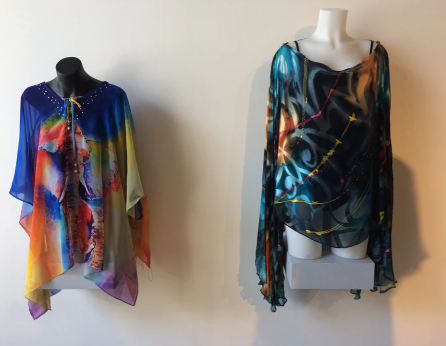
Artisan Gallery Exhibit, Brisbane (2019) (Image from Carol Taylor Designs, 2026d)
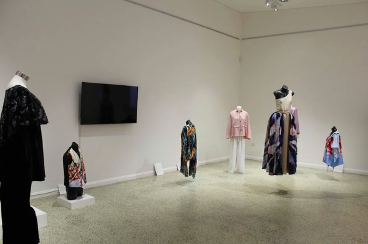
Tuggeranong Gallery Exhibit, Canberra (2021) (Image from Carol Taylor Designs, 2026d)
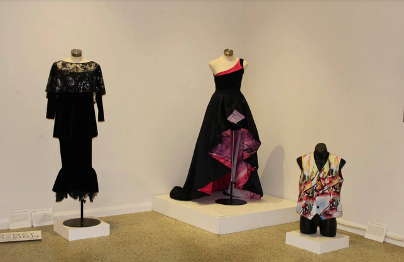
Tuggeranong Gallery Exhibit, Canberra (2021) (Image from Carol Taylor Designs, 2026d)
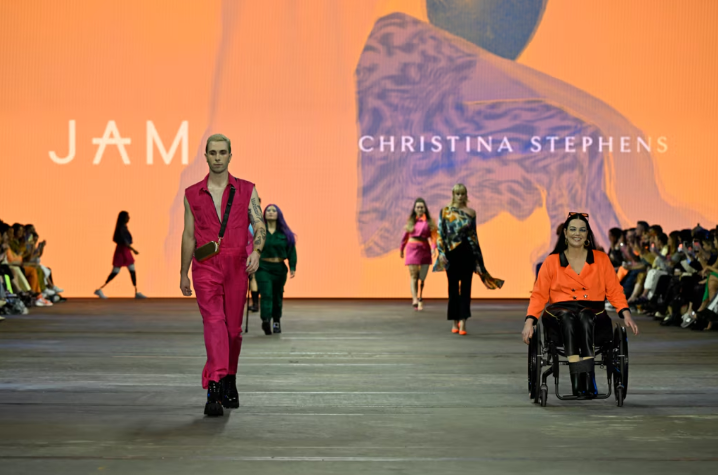
Afterpay Australian Fashion Week runway (Image from Birrell, 2022)
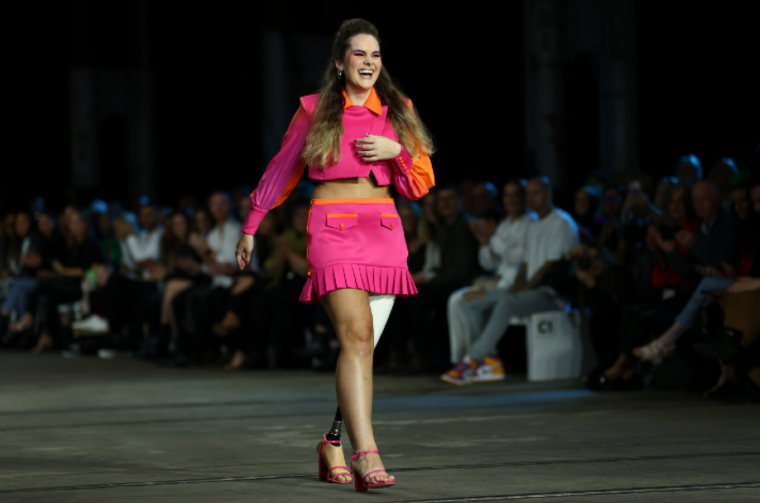
Afterpay Australian Fashion Week runway (Image from Hui-Miller, 2022)
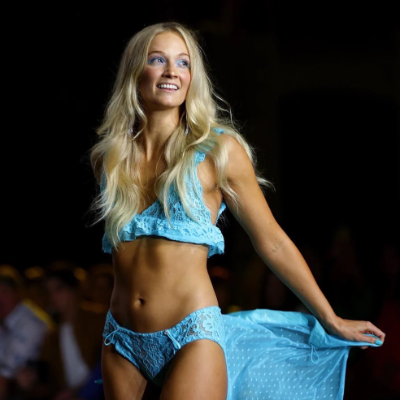
Afterpay Australian Fashion Week runway (Image from Carol Taylor Designs, 2026b)

Afterpay Australian Fashion Week runway (Image from Carol Taylor Designs, 2026b)
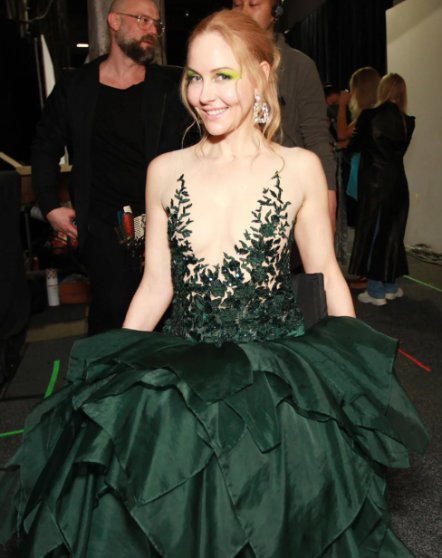
Afterpay Australian Fashion Week runway (Image from Carol Taylor Designs, 2026b)
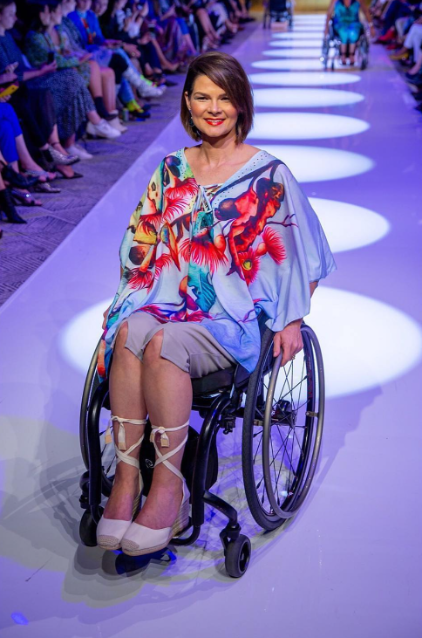
Afterpay Australian Fashion Week runway (Image from Blaauw, 2021)
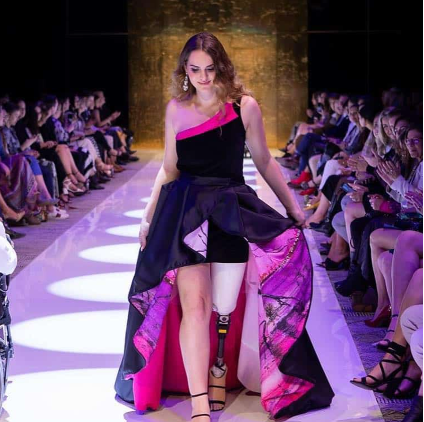
Afterpay Australian Fashion Week runway (Image from Blaauw, 2021)
-
Taylor has also influenced the field by helping push adaptive fashion into wider industry and public conversation. The 2022 Afterpay Australian Fashion Week show was a “big step forward for inclusive fashion,” (ABC News, 2022) especially given earlier criticism of the event’s lack of diversity. The fact that adaptive clothing was showcased for the first time in the event’s 27-year history suggests that Taylor’s work was part of a broader turning point in Australian fashion (ABC News, 2022). Her presence on that stage was symbolic as well as practical. It showed that disabled designers and disabled wearers belong within the same fashion conversations that have historically excluded them (Beesley, 2019).
-
Her advocacy extends beyond the runway and into leadership roles, including her work with organisations such as Spinal Life Australia, the QLS Diverse Abilities Network, and Arts Access Australia (Carol Taylor Designs, 2026d). This broadens her impact because it shows that her influence is not only aesthetic or commercial; it’s also social and political. Taylor demonstrates that designers can be advocates and that design can function as a tool for visibility, equity, and structural change. That makes her a particularly compelling figure in contemporary design where questions of inclusion and responsibility are becoming increasingly central.
Personal Reflection
Analysing Carol Taylor’s work reinforced for me that inclusive design is not a niche concern but rather a core measure of whether design is doing its job at all. One of the strongest insights I gained from studying her practice is that good design must account for the realities of the people using it. That aligns deeply with my own philosophy (See Design Manifesto). To me, design should offer clarity, dignity, and ease. Carol Taylor’s work reflects that same commitment through fashion, proving that accessibility and beauty are not opposing ideas, but should exist together from the beginning.
Because I have moved through the world in bodies and identities that are often misunderstood or overlooked, I’m especially aware of how design can either welcome someone in or exclude them. That awareness shapes the way I approach branding and design. I see design as a structure that has the potential to create belonging. For the past 8 years, I’ve been running a design studio built around the idea that design needs to be accessible. Whether I’m creating a brand identity, website, or marketing materials, I want the end result to feel clear, intuitive, and affirming, especially for those who may also be disabled.
The analysis on Carol Taylor has made me even more certain about the kind of designer I want to continue becoming. I want my work as a branding specialist to keep moving further toward human-centred and accessible design that actually supports people. Studying Taylor has reminded me that design can be both practical and political. It can solve problems, yes, but can also challenge exclusion and expand who gets to feel seen. That is the direction I want for my own career and Angell Designs as a whole. I want to keep creating brand and visual systems that genuinely serve the people using them. More broadly, I want my work to contribute to a design culture that values access, trust, and dignity as essentials. In that sense, this analysis did not just help me understand Carol Taylor more intimately; it also sharpened my understanding of the values I want my own career to stand for.